
Ancient Touchstones

Touchstone
A touchstone is:
a reference point or standard by which things across generations are judged,
a stable object that provokes debate,
something that reveals more about the people using it than about itself.
See also:
Locus classicus – the canonical point of reference for recurring arguments
Transgenerational fulcrum – more poetic; a pivot for debates across centuries
Cultural palimpsest – an old surface rewritten by each era
Hermeneutic crucible – a vessel in which meanings are refined by heat
But touchstone is the cleanest, truest word.
---
We ended last season with a deceptively simple question, one that hovered like a riddle over the ruins of the ancient Mediterranean: why did Greek philosophy live so long in the East, cherished by Syriac monks and Abbasid scholars, while Europeans strained for centuries to recover it, chasing fragments through monastic libraries and across the fault lines of empire? Someone asked me recently why I am interested in ancient Greece. It is not, at this end of the twentieth century, an innocent question. What should be of interest in the classics, and whose interest the classics ultimately serve, has become a subject of hard and sometimes bitter debate. Scholars like Padilla Peralta remind us that the study of antiquity is never clean; it is implicated in the power structures that preserved it, transmitted it, and weaponized it.
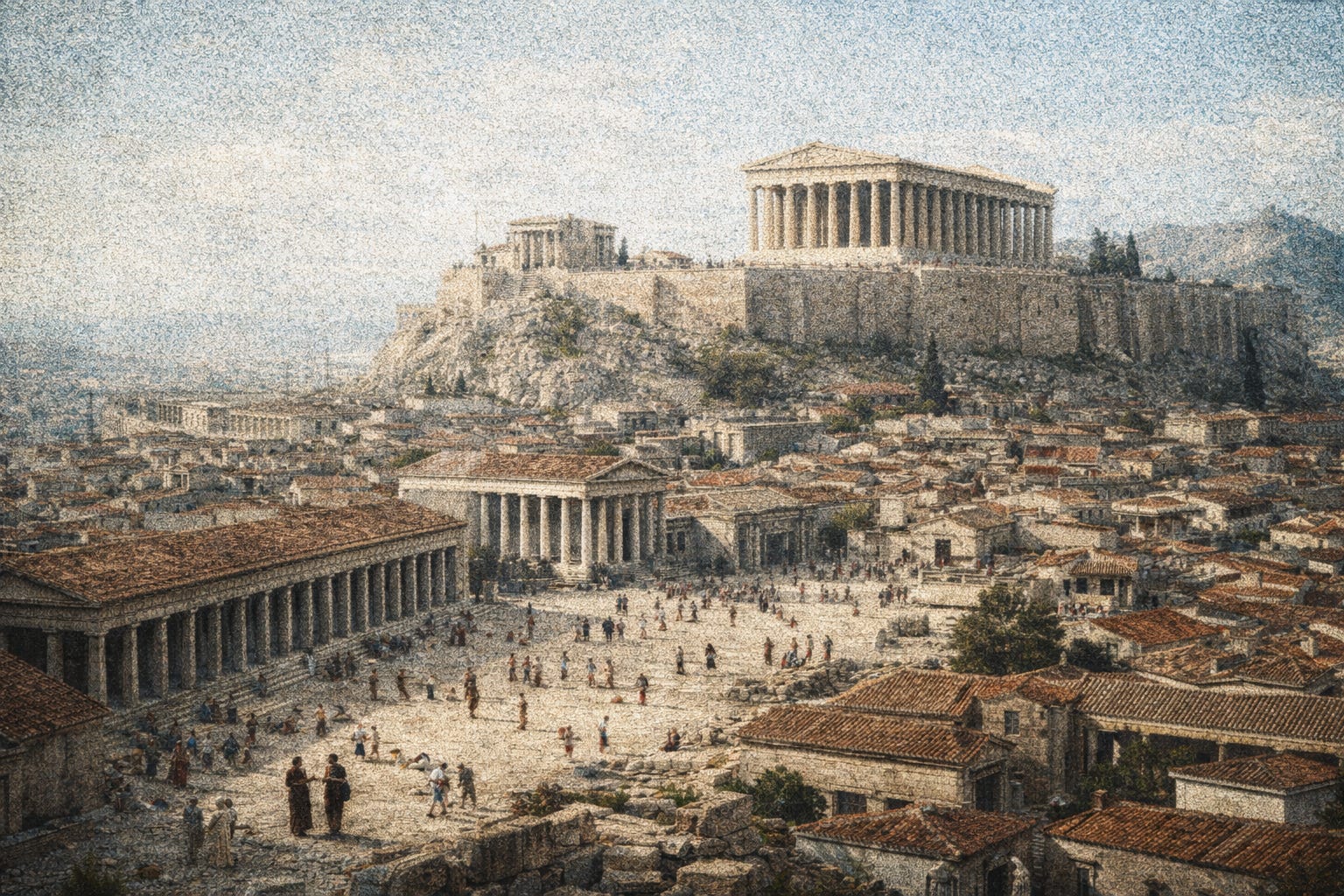
But this is precisely why the Greeks and Romans draw us back. Ancient philosophy has always been a kind of psychomantic device: it reveals truths not about itself but about the souls of those who gaze into it. Every generation interrogates the ancients and hears an answer shaped by its own longings. The Stoics became Victorian moralists, then cognitive therapists; Thucydides prophesied Vietnam, then Iraq, then Ukraine; Sophocles spoke to Freud, but also to the veterans of Fallujah. The classics endure not because they are fixed, but because they are capacious: they contain enough ambiguity, enough space, for our own contradictions to echo back at us.
In this way, antiquity becomes a touchstone, a point of contact across centuries where arguments recur, where each age measures its anxieties against something older, cooler, less inflamed by the passions of the hour. Greek and Roman thought give us a context that is not explicitly tied to modern tribal markers, the kinds of signs and slogans that electrify the bloodstream and shut down the part of the mind that sees clearly. In a world that has become almost uninhabitable with immediacy, the distance of antiquity offers a kind of relief, a cooling interval in which objectivity has a chance to breathe
.
That is why we return to the Greeks and Romans — not for purity, or heritage, or nostalgia, but because they give us a place to think in the presence of others who are long dead and therefore incapable of demanding our allegiance. They ask nothing of us except attention, and in the act of giving it, we discover what it is we truly believe.
But this testing never occurs under conditions of full visibility. If antiquity is a touchstone, it is one we press against ourselves in half-light, aware that what survives does so unevenly. The past does not present itself whole. It appears in fragments, accidents, and survivals—brilliant in places, silent in others. Every act of reading the ancients therefore begins not with certainty, but with a question about where the light falls, and why. And it must be admitted we often see our projections in the shadows.
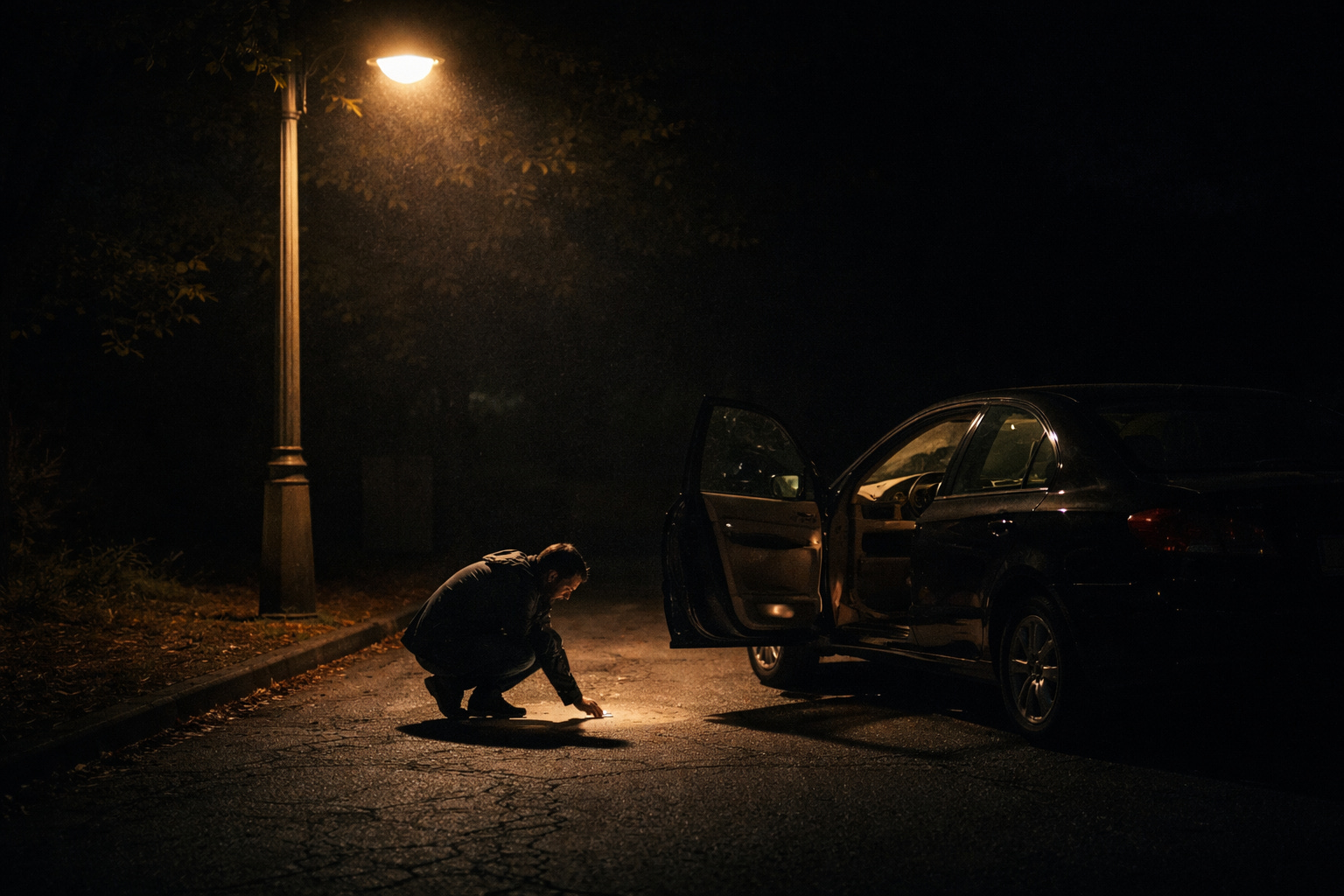
First, let me briefly tell a simple story of light and shadow. A man is searching for his keys at night beside his car, the door open, the interior light spilling onto the pavement. Someone asks him where he lost them. He gestures toward the darkness and says: over there, in the shadows. Then why are you looking here? Because this is where the light is.
The study of ancient Greece has long looked like this. We search where the light falls—where literature survived, where inscriptions endured, where archaeology can still speak. We catalogue what Homer, Plato, Aristotle, and the tragedians tell us, and we treat that illuminated patch as if it were the whole ground. But the ancients themselves knew better. They lived amid loss, oral traditions that never hardened into text, practices never monumentalized, meanings assumed rather than explained. The keys may not be where the light is. And yet we search there anyway, not because we are naïve, but because it is where searching is possible.
It seems not only legitimate but necessary to use classical language, if only to dispute territory with those who pimp her to ideology, to let classicism become a way of expressing ourselves rather than merely reconstructing a vanished world. The Greeks themselves did this constantly: speaking through myth, through borrowed forms, through the dead. They did not imagine that truth belonged only to the living. Neither should we. The texts we have are not the whole story, but they are enough to think with, argue against, refine ourselves by. If we speak through them, it is not an act of theft. The dead will not mind. They never expected to have the last word. This is not a claim of identity, nor an act of ventriloquism. To speak through ancient language is not to pretend that our meanings are theirs, but to accept that meaning itself has always been recursive. The Greeks did not treat their own past as inert. They argued with it, repurposed it, spoke through it. Thinking with the dead is not distortion; it is the oldest intellectual discipline we have. If done well this process can produce something authentic, but to do so it must reach something real in the ancient, must actually understand what was said as far as possible: it has to reach its touchstone.
The modern story of ancient Greece is often told from Athens because that is where the light is. It is where writing clustered early and densely, where texts survived in sufficient quantity to anchor later traditions of scholarship, philosophy, and political theory. Athens left behind an archive capable of narrating itself. But this has encouraged a quiet substitution: the place where Greek life became legible is treated as the place where Greek life was constituted. The result is not false, but partial — and structurally misleading.
Most Greeks did not live Athenian lives. They lived in port towns, sanctuaries, islands, border regions, and trading networks; they moved as sailors, craftsmen, mercenaries, healers, and colonists; they worshipped in local cults shaped as much by Anatolia, Phoenicia, Egypt, or the Black Sea as by any of the multiple pan-Hellenic ideals. Greekness was not born whole in the polis and then exported outward. It emerged unevenly, at the margins, through contact, mixture, and adaptation — long before Athens learned to theorize it.
Athens, for all its brilliance, is often a late and ordering voice. It preserves, rationalizes, and universalizes practices whose origins lie elsewhere: in oral epic, in ritual violence, in kinship structures, in divine figures who do not behave like concepts. When later readers begin the Greek story with Plato, Aristotle, or Periclean civic life, they search where the archive shines brightest — not where the loss, the fracture, or the formation actually occurred. The lamppost illuminates real ground. It simply does not illuminate all of it.
It is partly from this recognition of loss and asymmetry that a more radical temptation arises. If so much of ancient life is inaccessible, if our archive is partial by structure rather than by accident, then perhaps interior life itself, feeling, sensation, emotional experience, must also be irretrievably alien. What begins as a sober acknowledgment of evidentiary limits quietly mutates into a claim about human difference as such.
From here, the temptation is to say: because so much is missing, we cannot really know what the ancients felt; because belief structures differed, emotional life must have been fundamentally other. This temptation has recently been dignified with academic language. We are told that emotions are historically relative, that interior experience itself changes so radically over time that our intuitions are unreliable. The result is often presented as a bracing humility. In practice, it risks becoming something closer to abdication.
A better analogy than relativism is SETI. When scientists search for extraterrestrial intelligence, they do not assume they will encounter creatures who think exactly as we do. Nor do they assume the opposite—that alien minds would be so different as to be unreadable. They begin instead from constraint. Intelligence, wherever it arises, must solve certain problems: energy use, coordination, signaling, persistence across time. These constraints leave traces. You do not need shared language to recognize patterned signal amid noise. This is not an argument for naïve similarity. SETI does not assume that alien minds think like ours. It assumes something more modest and more demanding: that intelligence, wherever it appears, must work within constraints, and that those constraints generate recognizable structure. The task is not identification, but disciplined inference.
Classical scholarship already works this way. Archaeology, philology, epigraphy, comparative anthropology, and cross-cultural witness accounts form an overlapping web of weak signals. None is decisive on its own. Together, they constrain interpretation. Burial practices presuppose grief and memory. Legal codes presuppose anger, fear, and the desire for reparation. Care for the injured presupposes attachment and obligation. Tragedy presupposes recognition of loss, error, rage, and remorse. These are not metaphors. They are social technologies built to regulate affective forces that recur because human beings, situations and understandings all recur.
This is where the strongest versions of emotional relativism overreach. Of course ancient people did not experience “trauma” as a DSM category. Of course Homeric grief is not modern therapeutic grief. But to say that is not to say that grief itself was absent, unrecognizable, or fundamentally different in kind. Similar problems generate similar emotional pressures. Culture shapes how those pressures are interpreted, justified, endured, or sanctified—but it does not invent them ex nihilo.
At its weakest, the claim that “the ancients didn’t feel as we do” confuses non-identity with incomparability. It mistakes difference in moral framing for difference in affective capacity. Taken seriously, it would not merely complicate interpretation; it would undermine it. History would become unreadable, testimony unintelligible, empathy an illusion. If words like love, fear, loyalty, or grief floated free of shared human structure, we would not only fail to understand the dead—we would fail to understand one another across generations, classes, even households.
The irony is that historians who make the strongest claims about emotional difference rely most heavily on emotional recognition. They identify anger in polemic, fear in battle narrative, tenderness in care, cruelty in punishment, grief in lament.They do so confidently, because without such recognition the sources would dissolve into opacity. The denial of similarity is rhetorical, not methodological.
This matters for why we read the ancients. We do not read them to recover a perfectly accurate anthropology of extinct minds. That was never possible. We read them because they occupy a middle distance: far enough away to unsettle our assumptions, close enough to speak intelligibly to our condition. They are not aliens. They are not us. They are what happens when beings recognizably human live under different constraints, metaphysics, and moral economies.
Using ancient language, then, is not an attempt to ventriloquize the dead or to claim timeless authority. It is an act of disciplined conversation across limits. Like SETI, it accepts that the signal will be incomplete, that noise will intrude, that interpretation will always be provisional and occasionally self-serving. But it also insists that some things persist: embodiment, dependency, mortality, the need for meaning.
This posture is older than modern historiography itself. Plato wrote through Homer. Aristotle argued with the tragedians. The Stoics spoke to Heraclitus. Medieval thinkers spoke to Aristotle. Renaissance humanists spoke to Rome. None imagined they were recovering a pristine original. They believed, more modestly and more daringly, that the past could still think with them.
The keys may not be where the light is. But if we refuse to search where the light falls, we guarantee that we will never find anything at all. The mistake is not acknowledging darkness. The mistake is concluding that darkness renders recognition impossible. Between total recovery and total skepticism lies the only viable posture: constrained interpretation under conditions of loss.
The light also expands over time.

What once lay beyond the circle of visibility does not remain there forever. New tools, new questions, and new forms of patience slowly widen the illuminated ground. The history of antiquity is not a fixed archive but a moving frontier, and every generation inherits not only old texts but new ways of seeing what had been mute.
Consider archaeology itself. For a long time, bones were mute witnesses—useful for dating, perhaps, but thin sources for inner life. That has changed. Isotopic analysis, ancient DNA, trauma reconstruction, and contextual burial studies now allow us to see patterns of movement, diet, kinship, care, and violence that no text records. Works like Penelope’s Bones make the obvious but once-neglected point that the Homeric world was not just sung but lived: by women whose labor sustained households, by migrants whose origins were multiple, by bodies marked by work, childbirth, and survival. This does not replace Homer; it corrects the illusion that Homer was enough.
What these methods offer is not psychological transparency, but constraint. They do not tell us what individuals thought in moments of solitude. They tell us what kinds of lives were possible, what pressures were persistent, what forms of care, movement, violence, and endurance recur. Each new method narrows the range of plausible interpretations. Each reduces the space in which radical skepticism can hide.
The same expansion is happening in texts themselves. Scrolls once thought unreadable are now yielding their contents. At Herculaneum and Pompeii, carbonized papyri, burned into apparent silence by Vesuvius, are being deciphered through AI-assisted imaging and machine learning. Letters emerge from ash without unrolling a single scroll. Philosophical libraries long sealed are speaking again. Epicurean treatises, perhaps even unknown works by Epicurus himself or his immediate circle, are likely to appear in the years ahead—not as speculative fantasies, but as products of methods already delivering results. The canon is not closed. It never was.
This matters not because it promises some final recovery of “what the ancients really thought,” but because it keeps falsifying our confidence that we already know the limits of the evidence. Every recovered fragment reminds us how contingent survival has been, how much of what we took to be representative was merely accidental.
The light has also expanded conceptually. For much of modern scholarship, “ancient Greece” meant the polis: the self-contained city-state, speaking to itself, imagining itself as the measure of civilization against a backdrop of barbarians. That picture is expanding and becoming more granular. Work by scholars like Kostas Vlassopoulos has insisted—correctly—that Greece was never an island, culturally or economically. It was embedded in Mediterranean and Near Eastern networks of trade, slavery, warfare, translation, and imitation. Greeks defined themselves not in isolation but in constant contact with others whom they both depended on and disavowed.
Undoing the polis as the natural unit of analysis does more than revise political history. It changes how we read emotion, ethics, and identity. Shame, honor, hospitality, fear, curiosity, and desire look different in a world of constant cross-cultural encounter than in a closed civic loop. The Greeks were not only talking to themselves; they were reacting to Phoenicians, Persians, Egyptians, Scythians—sometimes with admiration, sometimes with anxiety, often with both at once, as friends and family, as foes, rivals and comrades in arms. Emotional life was shaped not just by civic norms but by exposure to difference.
Add to this the slow incorporation of climate data, pollen records, seismology, and environmental archaeology, and even the background conditions of Greek life shift. Famine, migration, collapse, and recovery were not abstractions. They were lived pressures that recur across eras, imposing similar stresses on human beings regardless of cosmology. The forms of meaning differ; the pressures rhyme.
None of this dissolves the limits we began with. The keys are still not all under the light. But the light is no longer a single lamp trained on a handful of canonical texts. It is a widening field, uneven and imperfect, yet undeniably brighter than before. And with each expansion, the same conclusion reasserts itself: the ancients were neither unknowable aliens nor moderns in costume. They were human beings responding, with familiar emotional equipment, to unfamiliar arrangements of the world.
To read them now is not to pretend that the darkness has vanished. It is to recognize that the circle of visibility grows: and that what it reveals continues to be worth thinking with.